Technology

LibreWolf: The No-Setup Privacy Browser for Your AI-Safe Browsing Future

LibreWolf: The No-Setup Privacy Browser for Your AI-Safe Browsing Future

LibreWolf is a privacy-first Firefox fork that prioritizes security by default, blocking trackers, disabling telemetry, and preventing fingerprinting without requiring user setup. It eliminates the need for complex privacy management, offering a seamless, anxiety-free browsing experience. While it sacrifices conveniences like password sync and cross-device support to reduce data exposure, it does so intentionally to resist surveillance capitalism. For users valuing autonomy over ease-of-use, LibreWolf represents a principled stand against invasive data practices. In an AI-driven era of digital tracking, it’s not just a browser—it’s a statement: privacy is a fundamental right, not a privilege.

Top Picks for VPS Hosting in Australia: Speed, Compliance & Future-Proof Infrastructure

Top Picks for VPS Hosting in Australia: Speed, Compliance & Future-Proof Infrastructure

Hosting in Sydney offers Australian businesses faster speeds, lower latency, and improved local SEO, critical for user experience and performance. Providers like DedicatedCore and DomainRacer deliver high uptime, AI-driven security, and scalable infrastructure. DedicatedCore excels in reliability with Tier IV certification and predictive AI, while DomainRacer focuses on rapid deployment and DevOps efficiency. AI enhances threat detection and automation, reducing downtime and accelerating development. Sustainability is also key, with green data centers lowering costs and boosting brand trust. In 2025, local, intelligent, and eco-friendly VPS hosting is essential for competitive growth, compliance, and innovation. The choice of provider directly impacts long-term success.

How to Create a Professional Email Domain: A Complete Guide

How to Create a Professional Email Domain: A Complete Guide

A custom email domain like *[email protected]* boosts credibility, trust, and professionalism, setting businesses apart from one-person operations using free email providers. It improves deliverability, enhances brand memorability, and supports long-term growth. Setting up a professional email involves five simple steps: register a domain, choose a hosting provider, configure MX records, create team accounts, and deploy across all channels. Proper MX record setup ensures reliable email delivery. Future-proofing includes securing domain variations early, keeping branding simple, supporting team expansion, and integrating with other tools. A branded email is a low-cost, high-impact investment in a scalable, trusted, and mobile-ready brand identity.

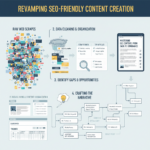
Revamping SEO-Friendly Content Creation: How to Transform Raw Web Scrapes into High-Quality Articles

Revamping SEO-Friendly Content Creation: How to Transform Raw Web Scrapes into High-Quality Articles

The article explains how to transform raw web data into high-quality, SEO-optimized content. Key steps include filtering low-quality sources, rewriting content for clarity and originality, and structuring it with clear headings and logical flow to enhance readability and search rankings. Emphasizing curation, originality, and user-focused design, the process turns scattered information into authoritative, engaging content that stands out. Success comes from treating content creation as a craft—prioritizing value, structure, and audience needs.

5 Signs Your Startup Is Ready to Launch and How to Scale Your E-Commerce Successfully

5 Signs Your Startup Is Ready to Launch and How to Scale Your E-Commerce Successfully

Your e-commerce business is ready to scale if it shows five key signals: real user validation, a tested product, a proven growth engine, financial stability with a 6–12 month runway, and a resilient, cross-trained team. Before scaling, build robust systems: unified product management (PIM), real-time order & inventory orchestration (OMS), warehouse automation, intelligent shipping, and 3PL performance tracking. Follow a 60-day roadmap: Days 1–20 (setup and integration), Days 21–42 (automate warehouse workflows), Days 43–60 (optimize routing and returns). These steps turn chaos into control, enabling scalable, sustainable growth. Scaling is not about working harder—but building smarter systems today for resilient, automated growth tomorrow.

How a Non-Programmer Built a Custom Website Using Only AI

How a Non-Programmer Built a Custom Website Using Only AI

A reporter with no coding experience successfully built a custom website using an AI assistant. The project started from a simple prompt to create a tool for filtering real estate listings by commute time. While the AI quickly generated the initial code, the process required human oversight. The user had to guide the AI to overcome challenges, like using an obsolete API, and correct contextual errors, such as inaccurate map data. The main conclusion is that AI democratizes coding, but it’s a partnership requiring human vision, problem-solving, and quality control to create a truly useful product.