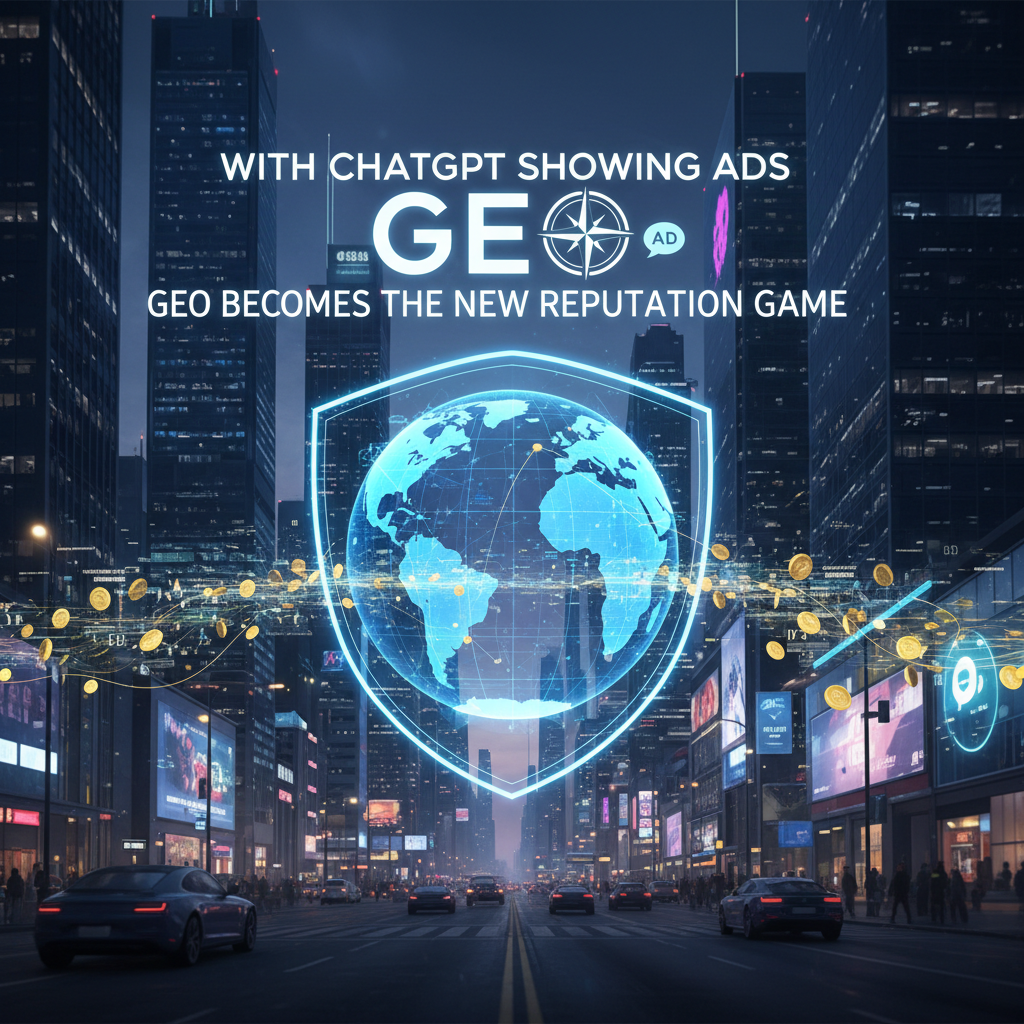
GEO: Win Trust in the ChatGPT Ad Era
As OpenAI introduces advertising into ChatGPT, the rules of digital discovery are changing. For startups and established brands alike, this signals a shift from buying attention to earning trust. This article explains Generative Engine Optimization (GEO), the critical new discipline for building credibility and ensuring your brand is cited by AI.
What is Generative Engine Optimization (GEO)?
Generative Engine Optimization (GEO) is the practice of making your brand’s information easy to understand, highly credible, and frequently referenced by Large Language Models (LLMs) like ChatGPT. While traditional SEO targets search engine algorithms to rank links, GEO focuses on becoming a foundational knowledge source that AI systems use to construct their answers.
Think of it as becoming the go-to expert in your field. When an AI needs to answer a user’s question, a strong GEO strategy ensures it turns to your content for reliable facts and insights. This makes your brand part of the answer itself, not just a link below it. For a simple breakdown, the following video explains the core concept.
The Core Pillars of a Strong GEO Strategy
To succeed with GEO, you must focus on three foundational pillars. These principles ensure that AI models not only find your content but also trust it enough to use it. Building a reputation with an LLM requires a deliberate and strategic approach to how you present information.
1. Be Understandable
Your content must be structured for clarity so an AI can easily parse and comprehend your expertise, products, and services. This involves:
- Using precise, unambiguous terminology.
- Organizing information with clear headings (H1, H2, H3).
- Creating concept maps and defining entities clearly.
- Breaking down complex topics into digestible, well-defined chunks.
2. Be Trustworthy
Brand trust is the currency of the AI era. LLMs are designed to prioritize accuracy and avoid misinformation. To be seen as trustworthy, your organization must build a reputation for reliability by:
- Citing authoritative sources, facts, and statistics.
- Ensuring all information is accurate and up-to-date.
- Demonstrating expertise through detailed, factual content from thought leaders.
3. Be Cite-Worthy
The ultimate goal of GEO is to become a primary source that an AI cites in its generated responses. This happens when your content is so authoritative and useful that the model considers it a definitive source on a topic. This is the highest form of digital authority, embedding your brand directly into the user’s discovery journey.
Why Ads in AI Make GEO a Top Priority
OpenAI’s move to test advertisements in ChatGPT marks a pivotal moment for digital advertising. While paid ads can capture a user’s attention, they operate separately from the AI’s core response. This creates a clear distinction: ads buy temporary visibility, but GEO earns lasting credibility.
In an environment where users seek direct, accurate answers, the brands that are most trusted by the machine will ultimately be the most useful to the user. Investing in GEO is a long-term play for relevance. It’s about building a foundation of authority that ensures your brand is part of the conversation, regardless of ad placements. As AI-powered discovery becomes the norm, your reputation is your most valuable asset.
Frequently Asked Questions (FAQ)
What is the main difference between SEO and GEO?
The primary difference is the target. Search Engine Optimization (SEO) aims to rank a webpage high in a list of links on search engines like Google. Generative Engine Optimization (GEO) aims to have your brand’s information directly integrated and cited within the answers generated by AI models like ChatGPT.
How can startups in India leverage GEO?
Startups, especially in tech, healthcare, and innovation sectors in India, can leverage GEO to build brand trust quickly. By producing high-quality, factual content about their niche (e.g., Ayurveda technology, rural development initiatives, semiconductor innovations), they can become an authoritative source for LLMs, gaining credibility that would otherwise take years to build through traditional marketing.
Will ads in ChatGPT make it less reliable?
OpenAI has stated that ads will be clearly labeled and will not influence the AI’s core responses. The goal is to keep the information generated by the LLM unbiased. However, the presence of ads makes it even more important for users to trust the source of the information, which reinforces the need for strong GEO among brands.
Is GEO only for large companies?
No, GEO is a powerful strategy for businesses of all sizes, including entrepreneurs and startups. Because it is based on the quality and authority of information rather than budget, smaller organizations can compete by establishing deep expertise in a specific niche. Building a reputation for being the best source on a narrow topic is a highly effective GEO tactic.
Conclusion
The rise of AI-mediated discovery and the introduction of ads in platforms like ChatGPT are rewriting the playbook for digital visibility. While paid placements offer a short-term solution, a durable, long-term strategy requires Generative Engine Optimization. By focusing on making your organization understandable, trustworthy, and cite-worthy, you are not just optimizing for an algorithm—you are building a foundation of brand trust that will secure your place in an AI-first future.