From Web Scraping to Standout Content: How to Transform Raw Data into SEO-Ready Masterpieces
Introduction
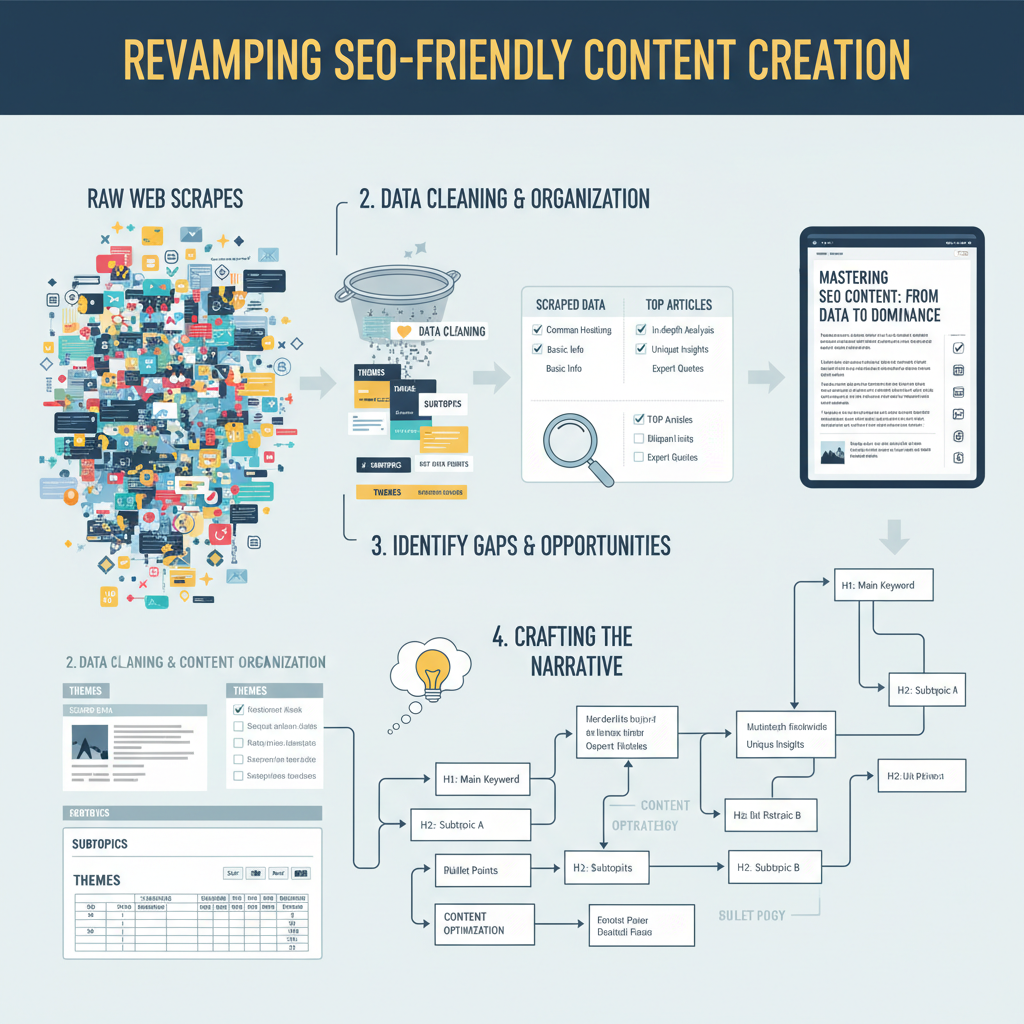
In today’s digital age, information is everywhere—but true value lies not in gathering content, but in refining it. The most successful creators and marketers don’t just pull data from websites; they transform raw, chaotic input into polished, insightful, and search-optimized articles that resonate with audiences and rank on Google. This process isn’t magic—it’s a disciplined craft. From filtering out noise to structuring for clarity and SEO, mastering the art of content refinement separates average writers from industry leaders. In this guide, we’ll walk through the essential steps to elevate your content from scattered snippets to authoritative, engaging pieces—complete with visual insights from top-tier experts.
Filtering the Signal from the Noise
Every time you scrape content from the web, you’re wading through a sea of distractions: intrusive ads, repetitive paragraphs, promotional fluff, and unverified claims. These elements aren’t just annoying—they actively harm your article’s credibility and readability. A professional-grade piece begins with ruthless curation. Prioritize sources with strong domain authority, data-backed insights, and minimal bias. Ask critical questions: Is this information verified? Does it add unique value? Is it written for readers or for algorithms? By filtering early and consistently, you ensure that only high-quality, reliable material forms the backbone of your final piece.
The Power of Rewriting for Impact and Originality
Paraphrasing isn’t just about avoiding plagiarism—it’s about reimagining ideas to make them clearer, more compelling, and perfectly tailored to your audience. A skilled writer doesn’t copy; they interpret. When you rework content, you adjust tone (from formal to conversational), eliminate passive voice, streamline complex sentences, and strengthen arguments with logical flow. The result? A natural rhythm that mimics how people actually think and read online. This kind of transformation makes content feel authentic and trustworthy, even when it’s built on existing research. Think of it as building a house: the original data is the raw lumber, but your rewriting is what shapes it into a well-designed, livable space.
Building SEO-Ready Structures That Read Like a Story
Even the most insightful content fails in search rankings if it lacks structure. Search engines reward articles with clear, logical hierarchies—well-defined headings, short paragraphs, strategic bullet points, and embedded statistics or analogies that explain complex ideas simply. An ideal structure isn’t just about SEO—it guides the reader’s journey. Start with a strong, keyword-rich H1 that promises value. Use H2s to break down main ideas, and H3s to drill into subtopics. Visualize your article as a roadmap: each section should naturally lead readers to the next. This approach boosts readability, reduces bounce rates, and signals to search engines that your content is both authoritative and user-focused. As design experts emphasize, hierarchy isn’t just for visuals—it’s the architecture of effective communication.
Conclusion
Great content isn’t created—it’s crafted. It starts with smart sourcing, evolves through strategic rewriting, and culminates in a structure that serves both readers and search engines. The most successful pieces don’t just inform—they guide, engage, and inspire action. By applying these principles—filtering rigorously, rewriting with purpose, and structuring for clarity—you turn scattered data into digital gold. So the next time you pull content from the web, ask: *Is this worth sharing? Is it structured for impact? Does it stand out in a sea of mediocrity?* Your answer could be the difference between being ignored and being remembered.