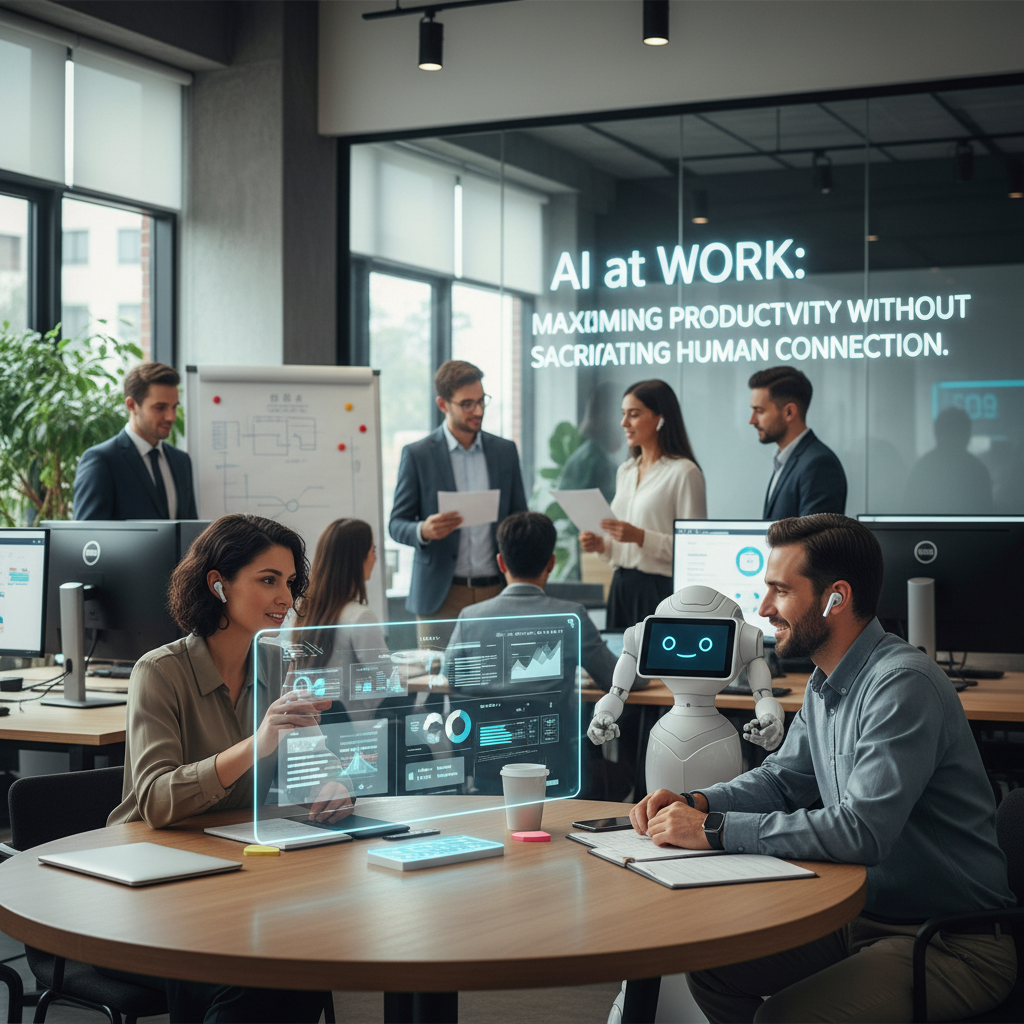
AI for Inbox Management: Boost Productivity, Not Isolation
A personal AI for inbox management is a tool designed to automate email-related tasks, boosting productivity by handling administrative burdens. As these AI assistants become more integrated into our work, we face a critical challenge: harnessing their power without sacrificing the human connection that fuels a healthy workplace culture. This guide explores how to strike that balance.
How a Personal AI Assistant Transforms Your Workflow
The most significant advantage of using a personal AI assistant is the dramatic increase in efficiency. These tools excel at automating the repetitive, time-consuming tasks that clog up our workdays, particularly within our inboxes. This frees up valuable mental energy for strategic thinking, creative problem-solving, and more meaningful collaboration.
Imagine turning hours of manual work into minutes with a simple command. A personal AI for inbox management workflow can revolutionize how you handle information.
- Instant Information Retrieval: Instead of manually searching through countless email threads, you can ask your AI to find specific information. For example: “Summarize all client feedback from the last two weeks regarding the new feature launch.”
- Automated Email Drafting: AI can draft routine emails, like follow-ups or meeting reminders. You can prompt it to repurpose a previous message for a new audience, ensuring consistency and saving significant time on email automation.
By delegating these tasks, employees can focus on higher-value work. As AI technology becomes more sophisticated, its ability to monitor and enhance productivity continues to grow, changing the very nature of how work gets done.
The Hidden Risk: AI’s Impact on Human Connection
While AI is a master of tasks, it cannot replace genuine human interaction. An over-reliance on AI for communication can inadvertently erode the social fabric of a team. The spontaneous “water cooler” conversations, collaborative brainstorming sessions, and peer-to-peer support are the bedrock of a positive workplace culture and employee wellness.
When employees turn to an AI for quick answers instead of a colleague, opportunities for connection are lost. Over time, this can lead to feelings of isolation, reduced team cohesion, and a decline in collaborative innovation. Preserving human connection is not just a feel-good sentiment; it’s a business imperative for long-term success and a crucial aspect of effective managing people.
Leadership’s Guide to Integrating AI Strategically
The solution isn’t to reject AI but to integrate it with intention. Leadership plays a pivotal role in guiding teams to use AI as a tool that enhances human capability, rather than replacing human interaction. A thoughtful strategy ensures you reap the benefits of AI and Machine Learning while strengthening your team.
- Establish Clear Use Cases: Train your team on when to use AI—for data analysis, scheduling, and drafting first drafts—and when to prioritize human interaction, such as for giving nuanced feedback, mentorship, and resolving conflict.
- Promote AI Literacy: Empower employees with the skills to use AI tools effectively and ethically. When people understand an AI’s purpose and limitations, they can leverage it more responsibly.
- Champion Human-First Moments: Intentionally create and protect time for team bonding. This includes non-work check-ins, celebrating successes together, and encouraging projects that require deep collaboration.
- Model Healthy Behavior: Leaders must lead by example. Use AI for your own administrative tasks but make a visible effort to engage in direct, personal conversations with your team members for all significant matters.
By focusing on human potential, leaders can ensure AI serves as a powerful co-pilot in navigating the future of work, not an autopilot that disconnects us from one another.
Frequently Asked Questions (FAQ)
What is a personal AI for inbox management?
A personal AI for inbox management is a software tool that uses artificial intelligence to help you organize, prioritize, and respond to emails. It can automate tasks like sorting messages, summarizing long threads, drafting replies, and scheduling meetings, ultimately saving you time and increasing productivity.
How does AI impact workplace wellness?
AI can positively impact wellness by reducing administrative burnout and freeing up time for more fulfilling work. However, if not managed carefully, it can negatively impact wellness by reducing social interaction and leading to feelings of isolation. The key is to balance AI’s efficiency with intentional efforts to foster human connection.
Can AI replace human managers?
No, AI is not poised to replace human managers. While AI can handle many administrative and data-analysis aspects of management, it cannot replicate the essential human skills of leadership, such as empathy, mentorship, emotional intelligence, and inspirational motivation. AI is a tool to assist managers, not replace them.
Conclusion
Integrating a personal AI assistant into your workflow offers a transformative path to greater productivity. By automating administrative burdens, it unlocks our most valuable asset: human creativity. However, this power comes with a responsibility. Leaders must guide this integration thoughtfully, ensuring AI is used as an efficiency tool, not a social substitute. By setting clear guidelines and actively fostering a culture of human connection, organizations can embrace the future of work without losing their soul.