5 Must-Have Signals Your E-Commerce Business Is Ready to Scale (Plus a 60-Day Growth Blueprint for 2026)
Introduction
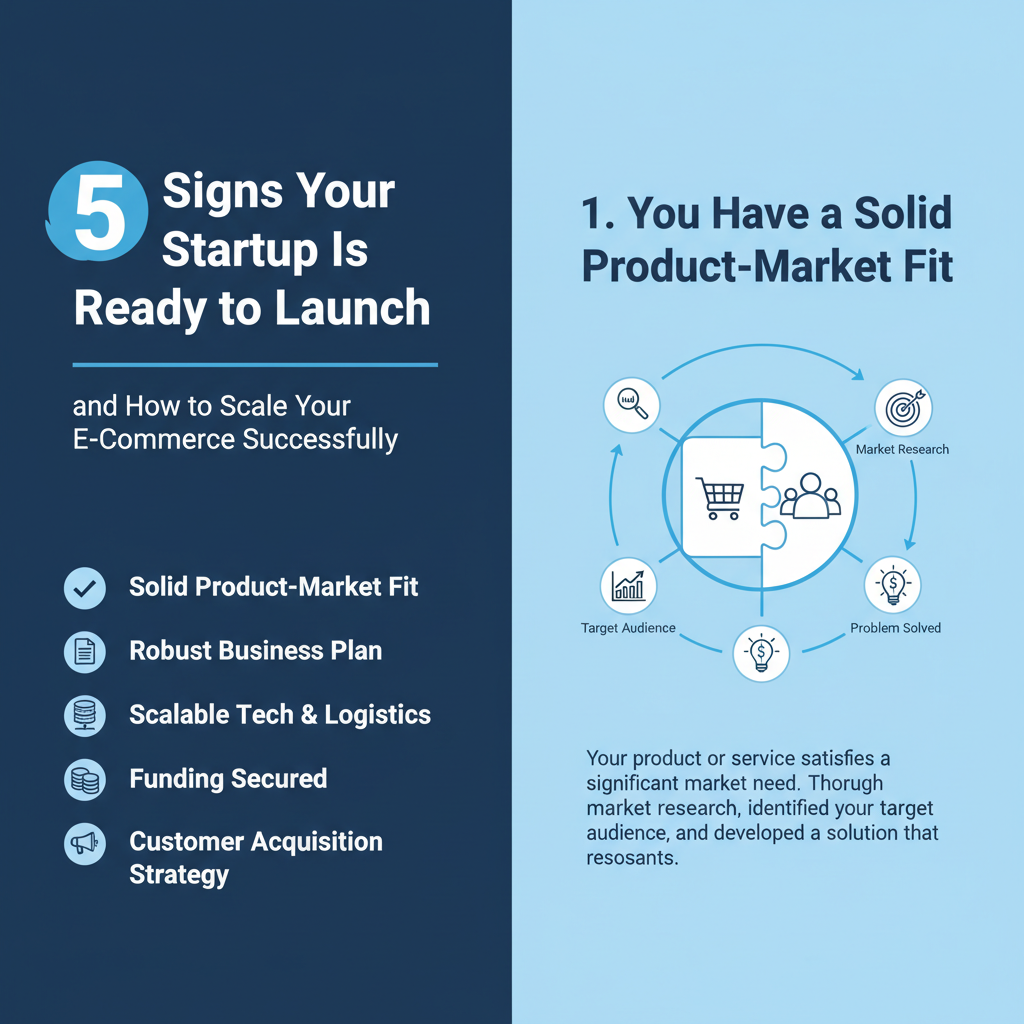
Launching a new e-commerce venture or scaling an existing one in 2026 isn’t just about having a product—it’s about being operationally prepared for explosive growth. Many startups fail not from lack of creativity, but from poor timing and unprepared systems. Before you hit “go live,” you need to confirm you’re not just building a business—you’re building a scalable machine. In this guide, we’ll reveal the five critical signs that your company is truly launch-ready, then walk you through a proven 60-day execution plan designed to turn your MVP into a multichannel powerhouse. We’ll also bring in real-world video insights to show you exactly how top-performing warehouses and fulfillment teams stay ahead of chaos—so you can grow faster, smarter, and with far less stress.
Is Your Business Engine-Ready? 5 Proofpoints You’re Launch-Ready
Before investing in ad spend or expanding distribution, ensure these foundational signals are confirmed. Ignoring them often leads to burnout, customer disappointment, and irreversible financial strain.
1. Real User Validation, Not Just Hopes
Forget surveys and assumptions. True product-market fit emerges when customers are consistently returning, recommending your product, or even waiting in a pre-launch queue. If your early adopters are using the product in real-world scenarios and sharing feedback with tangible intent, you’re on solid ground.
2. A Robust, Tested Product
Your minimum viable product (MVP) should have survived real-world stress testing—under different customer behaviors, shipping scenarios, and usage patterns—without critical bugs or breakdowns. If shipping delays, account errors, or checkout crashes are still common, scale is premature.
3. A Growth Engine That Actually Works
Don’t rely on random traffic. Your growth strategy should be mapped across 2–3 high-conversion channels (e.g., TikTok Shop, Amazon, Shopify) with clear customer acquisition paths. Use data—not guesswork—to confirm where your first 100 customers will come from and how you’ll keep attracting more.
4. Financial Stability with a Buffer
Even with traction, you need a runway—ideally 6–12 months—funded by savings, investors, or early revenue. This buffer covers spikes in ad costs, seasonal demand, or unexpected logistics surprises. Running out of cash post-launch is a death sentence.
5. A Resilient Team Across Functions
No single point of failure. Whether it’s support, engineering, or operations, your team must be cross-trained and scalable. If your founder is the only person who knows how to process returns or fix order exports, your business cannot grow without bottlenecks.
Building the Backbone: Pre-Growth Systems That Prevent Chaos
Scaling isn’t about throwing more resources at a problem—it’s about building intelligent systems that automate, predict, and optimize. The best multichannel brands don’t “manage” operations; they “orchestrate” them through integrated technology. Here’s what you need before you scale:
Unified Product & Listing Management (PIM)
One product entry, every store updated. A centralized PIM ensures your product titles, images, and descriptions stay consistent across Shopify, TikTok Shop, and Amazon—even when you add new variations or update pricing. No more time-consuming, error-prone manual updates.
Real-Time Order & Inventory Orchestration (OMS)
This is your command center. An Order Management System (OMS) syncs sales data across channels, prevents overselling, and automatically triggers restocking alerts. When inventory drops to 10 units, the system knows to reorder—before the customer even clicks “Buy.”
Smart Warehouse Workflow Automation
Introduce scanning systems, wave-based picking, and batch processing. Use mobile devices to guide workers through optimized paths. The faster your team picks and packs, the lower your per-unit labor cost—especially during Black Friday spikes.
Intelligent Multi-Carrier Shipping
Stop paying full freight rates. Use real-time shipping rate comparators to pick the cheapest, fastest carrier per order. Auto-labels generate instantly, and you can negotiate better rates by bundling volume across platforms.
3PL & Partner Performance Dashboard
If you’re working with third-party fulfillment providers (from FBA to regional 3PLs), a centralized hub with performance benchmarks lets you quickly track delivery speed, return rates, and service quality—so you know when to switch partners or renegotiate contracts.
Your 60-Day E-Commerce Scaling Roadmap: From Startup to Growth Machine
Scaling isn’t a single event—it’s a disciplined, phased journey. Use this 60-day sprint framework to turn theory into systems that scale with you.
Phase 1: Day 1–20 – Foundations First
Start by deploying your core OMS (tools like Ozlink or Peoplevox), syncing it with your sales channels, and automating label generation for USPS, FedEx, and Amazon. Use live shipping rate tools like ParcelCompare to compare prices before shipping—avoid overpaying on your first 500 orders. Build real-time dashboards that update daily with sales data, shipping delays, and return trends. This phase is about control, not speed.
Phase 2: Day 21–42 – Automate Your Warehouse Flow
Roll out mobile scanning systems and wave-based order processing. Workers receive digital pick lists optimized by location, reducing travel time and increasing accuracy. Automate warehouse workflows to match peak demand without hiring more staff.
Phase 3: Day 43–60 – Optimize Cost, Improve Predictability
Enable dynamic order routing: automatically send orders to the closest fulfillment center or carrier based on delivery speed and cost. Set up a central return processing hub to cut down on reverse logistics waste—over 30% of e-commerce losses come from poor returns handling.
By Day 60, your system should be handling double the volume with half the manual effort. You’re no longer reacting—you’re optimizing in real time.
Conclusion
Scaling in 2026 isn’t about pushing harder—it’s about building smarter. The five readiness signals we outlined are your early warning system. And the 60-day roadmap isn’t just a checklist; it’s a repeatable blueprint for turning chaos into control. By automating inventory, syncing channels, and leveraging real-time data, you create a business that grows without burning out. The future of e-commerce isn’t just multichannel—it’s multilayered, automated, and resilient. So ask yourself: Are you scaling—or just surviving? The answer starts with the systems you build today.