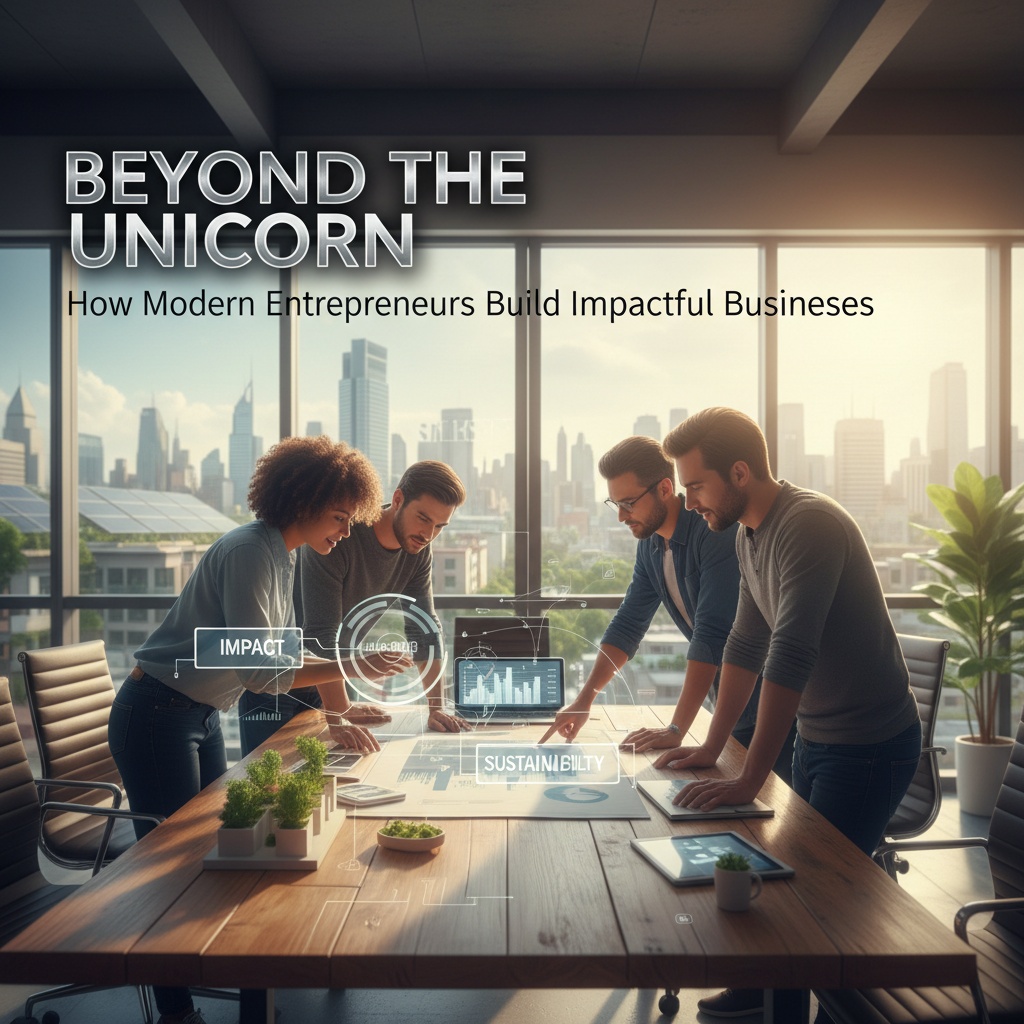
Beyond Venture Capital: A Guide to Startup Funding & Growth
What is Entrepreneurship?
Entrepreneurship is the act of creating a business while bearing most of the risks and enjoying most of the rewards. The modern narrative often glorifies a single path: a frantic race for venture capital to build a billion-dollar “unicorn.” But this high-stakes model is not the only route to impactful business growth.
This article explores alternative, powerful models for building a successful company. We will examine the trade-offs of startup funding, the power of bootstrapping, and the importance of maintaining strategic control to build a lasting enterprise on your own terms.
The Venture Capital Path: Growth vs. Control
Seeking venture capital (VC) is a common strategy for startups aiming for rapid scaling. Investors provide significant cash infusions in exchange for equity, or ownership, in the company. This capital can fuel aggressive hiring, marketing, and product development. However, this path comes with significant trade-offs that every founder must consider.
The primary challenge is equity dilution and the potential loss of founder control. When you accept outside investment, you are also accepting outside influence. Investors have their own goals, often centered on a fast return on their investment, which may not align with your long-term vision. This pressure for short-term growth can force premature decisions and compromise the original mission of the business.
The Bootstrapper’s Playbook: Funding Without Forfeiture
Bootstrapping represents the opposite approach to startup funding. It involves building a company from the ground up using only personal savings and the revenue it generates. While this path often means slower, more methodical growth, its primary advantage is immense: 100% strategic control. By retaining full ownership, you are free to steer your business according to your vision, not an investor’s timeline.
This model encourages resourcefulness and a deep focus on profitability from day one. Consider the story of Roof Maxx, a family-owned business that created an innovative, eco-friendly solution for rejuvenating aging roofs. Instead of chasing trends, they solved a practical, widespread problem in an overlooked industry, growing into an eight-figure company without surrendering a single share of equity. This is a testament to sustainable business growth driven by value creation, not just cash injection.
Mission-Driven Innovation: Purpose as a Strategy
Beyond funding models, some of the most powerful ventures are fueled by a clear social mission. True innovation often arises from a desire to solve a critical real-world problem. This approach requires more than just a business plan; it demands a coherent strategy where every decision serves a larger purpose. This is where leaders differentiate between a simple plan and a guiding strategy.
In Tanzania, entrepreneur Gerald Revocatus co-founded Fiqra Academy to address a crucial gap in youth empowerment. Witnessing skilled graduates struggle to find jobs inspired him to create an EdTech platform that provides affordable, relevant digital skills training. Fiqra Academy’s success is not measured by funding rounds, but by its impact on preparing young Africans for the digital economy. This mission-driven approach provides a powerful “why” that guides the company’s strategy and fuels its long-term resilience.
Frequently Asked Questions (FAQ)
What is bootstrapping in a startup?
Bootstrapping is the process of starting and growing a business using personal finances or the revenue generated by the business itself. It avoids external funding sources like venture capital, allowing founders to maintain full ownership and strategic control over their company.
What are the main risks of taking venture capital?
The main risks of accepting venture capital include equity dilution (losing ownership percentage), loss of decision-making control, intense pressure for rapid growth to meet investor expectations, and the possibility of being forced to pivot away from the original vision to chase profitability for a quick exit.
Can a business be successful without outside startup funding?
Absolutely. Many highly successful businesses have grown without any outside startup funding by using the bootstrapping model. This path requires a strong focus on early profitability and disciplined financial management but can lead to a more sustainable and resilient business in the long run.
How does strategic control impact business growth?
Strategic control allows founders to make decisions that align with their long-term vision and values, rather than an investor’s short-term goals. This can lead to more sustainable business growth, a stronger company culture, and the freedom to innovate and pivot at a pace that makes sense for the business and its market.
Conclusion
The journey of entrepreneurship is not one-size-fits-all. While venture capital can provide the fuel for explosive growth, it often comes at the cost of control. The stories of bootstrapped successes and mission-driven innovators prove that sustainable business growth can be achieved through different means. The most successful ventures are ultimately built not by chasing investor approval, but by maintaining a clear vision and a relentless focus on creating real-world value.