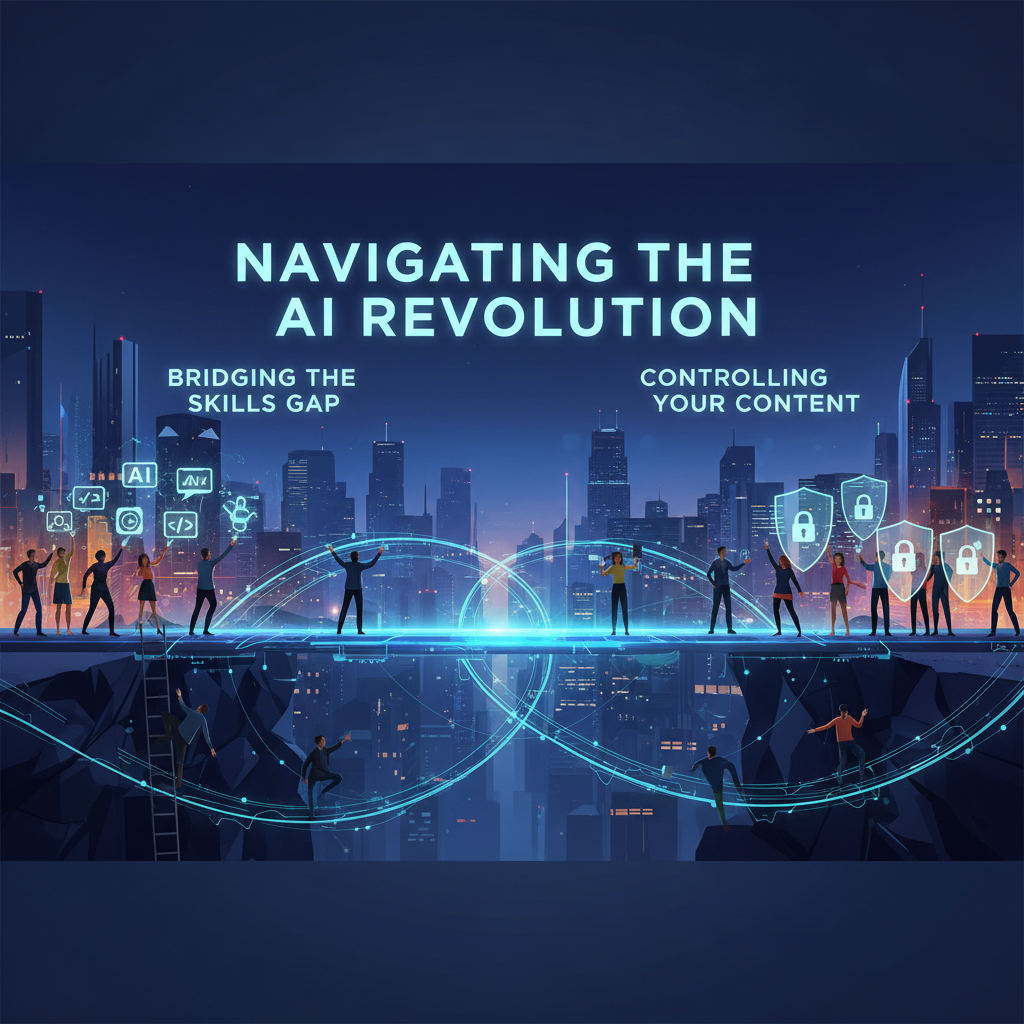
AI’s Dual Challenge: Skills & Content Control
The AI revolution presents a critical turning point for businesses and workers. As artificial intelligence advances, it creates a pressing **digital skills gap** while also raising questions about **content control** and intellectual property. This article explores two key solutions: strategic training to build a future-ready workforce and new digital tools empowering creators to manage how AI uses their content.
Closing the Digital Skills Gap with Tech Talent
A major challenge in the modern economy, particularly in nations like South Africa, is the shortage of skilled technology professionals. Organizations like mLab** are tackling this issue head-on by developing programs that turn aspiring learners into paid professionals, directly addressing the need for **youth employment** and a robust pipeline of **tech talent**.
These initiatives focus on practical, in-demand skills through intensive training. Programs often cover everything from **web development services** to cloud administration and, crucially, the skills needed to support the AI ecosystem itself, such as data annotation. The goal is to equip young people with job-ready expertise, as evidenced by the high demand for such programs and their success in placing graduates into key industry roles.
What is Data Annotation and Why Does It Matter?
A cornerstone skill for the **AI revolution** is data annotation. In simple terms, data annotation is the process of labeling and categorizing data—like images, text, or audio—so that machine learning models can understand and learn from it. This human-guided process is what makes AI “smart.” Without accurately labeled data, self-driving cars couldn’t recognize pedestrians, and chatbots couldn’t understand user queries.
Understanding this fundamental process is key to appreciating how modern AI is built. The video below provides a quick and clear explanation of what data annotation entails.
As AI becomes more integrated into business, the demand for data annotators has created a significant global job market. For regions focused on boosting **youth employment**, this presents a powerful opportunity. The following video highlights how data annotation has become a viable remote career, with opportunities available worldwide, including in Africa.
Regaining Content Control in the Agentic Web
While one side of the AI coin is about building skills, the other is about protecting digital assets. Business owners and content creators are growing concerned about their intellectual property as AI models crawl the web for training data. In response, a major partnership between Cloudflare and GoDaddy is delivering essential small business digital tools for **content control**.
This collaboration gives millions of website owners direct access to tools like AI Crawl Control. This feature allows a site owner to explicitly grant or deny permission to AI crawlers, providing a clear mechanism to protect content from being used for AI training without consent. This marks a significant step toward establishing a fair and transparent digital environment, often called the Agentic Web, where AI agents and creators can coexist respectfully.
Building a Trusted Future with Open Standards
To ensure long-term trust and fairness online, both Cloudflare and GoDaddy are championing the development of open standards. The goal is to create a verifiable system where the identity and purpose of AI agents are transparent to website owners. Key proposals include:
- Agent Name Service (ANS): Proposed by GoDaddy, this standard would function like a registry for AI agents, using existing DNS technology to verify who operates a bot and why it is accessing a site.
- Web Bot Authentication: Introduced by Cloudflare, this uses cryptographic verification to allow website owners to confirm that a bot is legitimate and not an imposter.
Together, these standards aim to create a predictable and trustworthy framework, allowing innovation to flourish while respecting the rights of content creators.
Frequently Asked Questions (FAQ)
What is the digital skills gap?
The digital skills gap refers to the mismatch between the advanced technology skills demanded by employers and the skills possessed by the available workforce. As technology like AI evolves rapidly, this gap widens, creating a need for focused training and reskilling initiatives.
How can small businesses control AI access to their websites?
Small businesses can use new tools like Cloudflare’s AI Crawl Control, now being integrated by hosts like GoDaddy. This tool allows website administrators to create rules in their `robots.txt` file to specifically block or allow known AI crawlers, giving them direct control over their content.
What kind of jobs are created by the AI revolution?
The AI revolution is creating new roles beyond just developers and data scientists. Jobs like Data Annotator, AI Prompt Engineer, AI Ethics Officer, and AI Trainer are emerging. Many of these roles, especially data annotation, offer flexible, remote work opportunities.
Why are open standards important for the future of AI?
Open standards are crucial for creating a transparent, fair, and interoperable digital ecosystem. For AI, they establish clear rules for how AI agents identify themselves and interact with web content, preventing a chaotic “wild west” scenario and protecting the intellectual property of creators.
Conclusion
Successfully navigating the AI Revolution requires a balanced approach. We must proactively invest in human capital through training initiatives like those from mLab to close the **digital skills gap**. Simultaneously, we must establish technical safeguards and open standards, championed by companies like Cloudflare and GoDaddy, to ensure creators maintain **content control**. By empowering people with skills and creators with control, we can build an AI-driven future that is both innovative and equitable.