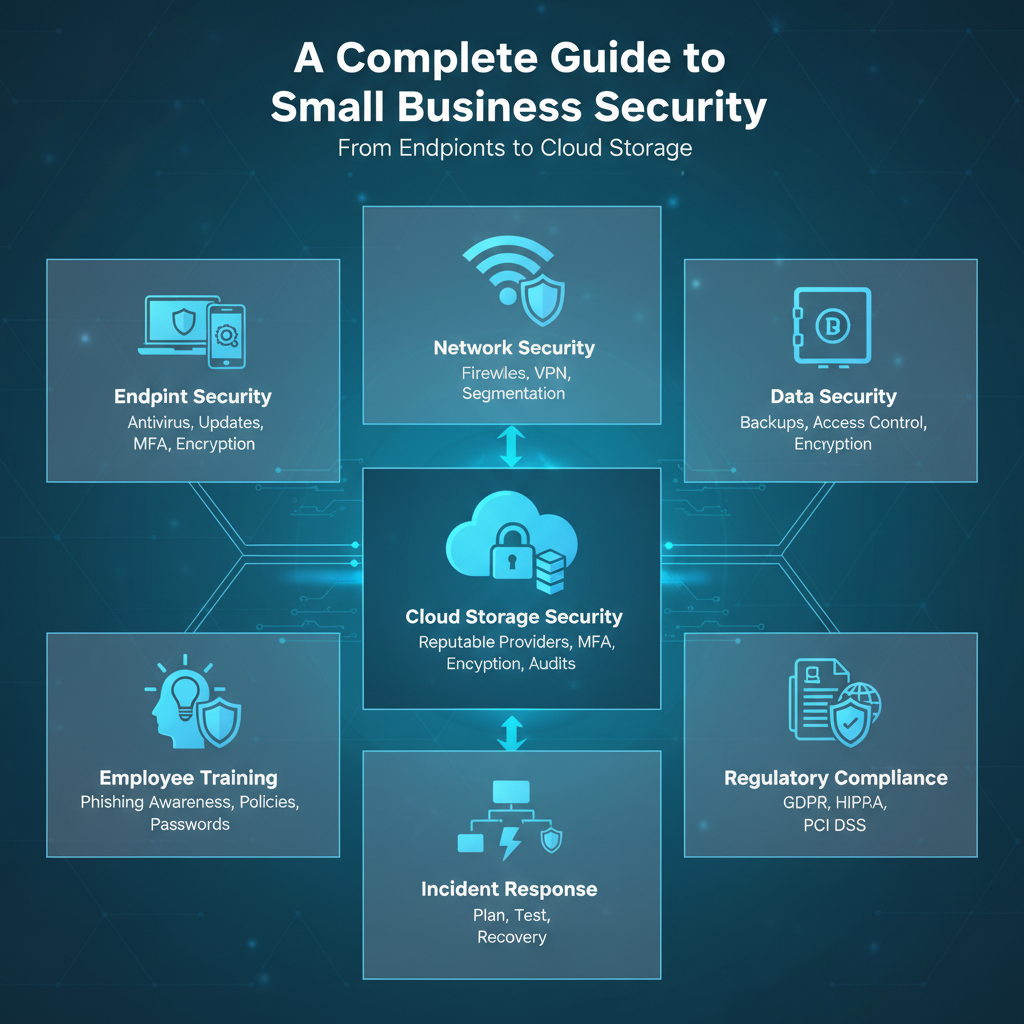
Small Business Security: A Guide to Endpoint Protection
For a small business, managing device security and protecting data can feel overwhelming. This guide simplifies digital infrastructure management by focusing on two core areas: securing every device with endpoint management and safeguarding your critical information with robust data protection, turning cybersecurity from a challenge into a business advantage.
What Is Endpoint Management for Small Businesses?
In today’s business world, your network is no longer just the computers in your office. It includes laptops, smartphones, tablets, and any other device that connects to your company’s data. Each of these connection points is called an endpoint, and together they create a large “attack surface” for cybercriminals. A single unsecured phone can become a gateway for a major data breach.
Endpoint management is the process of monitoring, securing, and controlling all these devices from a central location. It’s about knowing what’s connected to your network and ensuring it meets your security standards. For small businesses, this practice is fundamental to reducing risk and preventing unauthorized access.
How to Simplify Digital Infrastructure Management
The key to effective endpoint security is centralization. Instead of trying to manage each device individually, a Unified Endpoint Management (UEM) platform provides a single dashboard for total visibility and control. This “single source of truth” is essential for any modern small business security strategy.
A modern UEM solution helps you automate critical security tasks that are too time-consuming to handle manually. These platforms can:
- Automate Patch Management: Automatically deploy security updates to all devices to fix vulnerabilities as soon as they are discovered.
- Enforce Security Policies: Ensure all devices have required protections like strong passwords, screen locks, and active firewalls.
- Leverage AI in Security: Use artificial intelligence to detect unusual behavior, identify threats faster, and simplify administration.
By bringing all these functions into one integrated suite, you can drastically simplify your security operations and strengthen your defenses.
Protecting Your Data with Secure Cloud Storage
Once your devices are secure, the next priority is protecting the data itself. Your customer lists, financial records, and intellectual property are your most valuable assets. Relying on basic, consumer-grade storage is a significant risk. Effective data protection starts with choosing the right cloud storage solution.
When evaluating providers, look for a “privacy-first” commitment. This means the service should offer end-to-end data encryption, a powerful security feature that scrambles your files during transfer and while they are stored on servers. This ensures that even if a server is compromised, your data remains unreadable. A truly secure provider will guarantee they never scan or sell your data for advertising purposes, making them a trustworthy partner for your business.
Building a Resilient Security Culture
Technology alone cannot provide complete cybersecurity. Your employees are a critical part of your defense system. Cybercriminals often use social engineering tactics like phishing emails to trick people into giving up credentials or installing malware. A strong security culture turns your team into a “human firewall.”
This involves ongoing training to help employees recognize suspicious activity and creating a blame-free environment where they feel comfortable reporting potential threats immediately. When your team is empowered and educated, they become one of your greatest security assets, actively helping to prevent a data breach before it happens.
Frequently Asked Questions (FAQ)
What is the biggest security risk for a small business?
The biggest risks are often unmanaged endpoints and human error. A single employee device without proper security updates or a successful phishing attack can compromise an entire organization, making both endpoint management and building a strong security culture essential.
Why is data encryption so important for data protection?
Data encryption is crucial because it protects your information even if a breach occurs. It scrambles data into an unreadable format, so cybercriminals cannot use it without the unique decryption key. This makes it a final, powerful line of defense for your sensitive files.
What is the first step to improve small business security?
The first and most important step is to gain visibility. You cannot protect what you cannot see. Implementing a Unified Endpoint Management (UEM) solution to discover, monitor, and manage every device accessing company data is the foundational step to building a robust security posture.
Conclusion
A proactive and layered approach is the only way to win the battle against modern cyber threats. By combining the centralized control of UEM for device security, the robust protection of encrypted cloud storage for your data, and an engaged security culture, you can build a formidable defense. This integrated strategy doesn’t just prevent a costly data breach—it provides the peace of mind needed to focus on growing your business.