What is a GPT Agent? Building Custom AI Workflows
Meta Description: Discover what a GPT agent is and how specialized AI is building custom AI workflows. Explore no-code app development and cybersecurity automation examples.
What Are AI Agents? Beyond Simple Chatbots
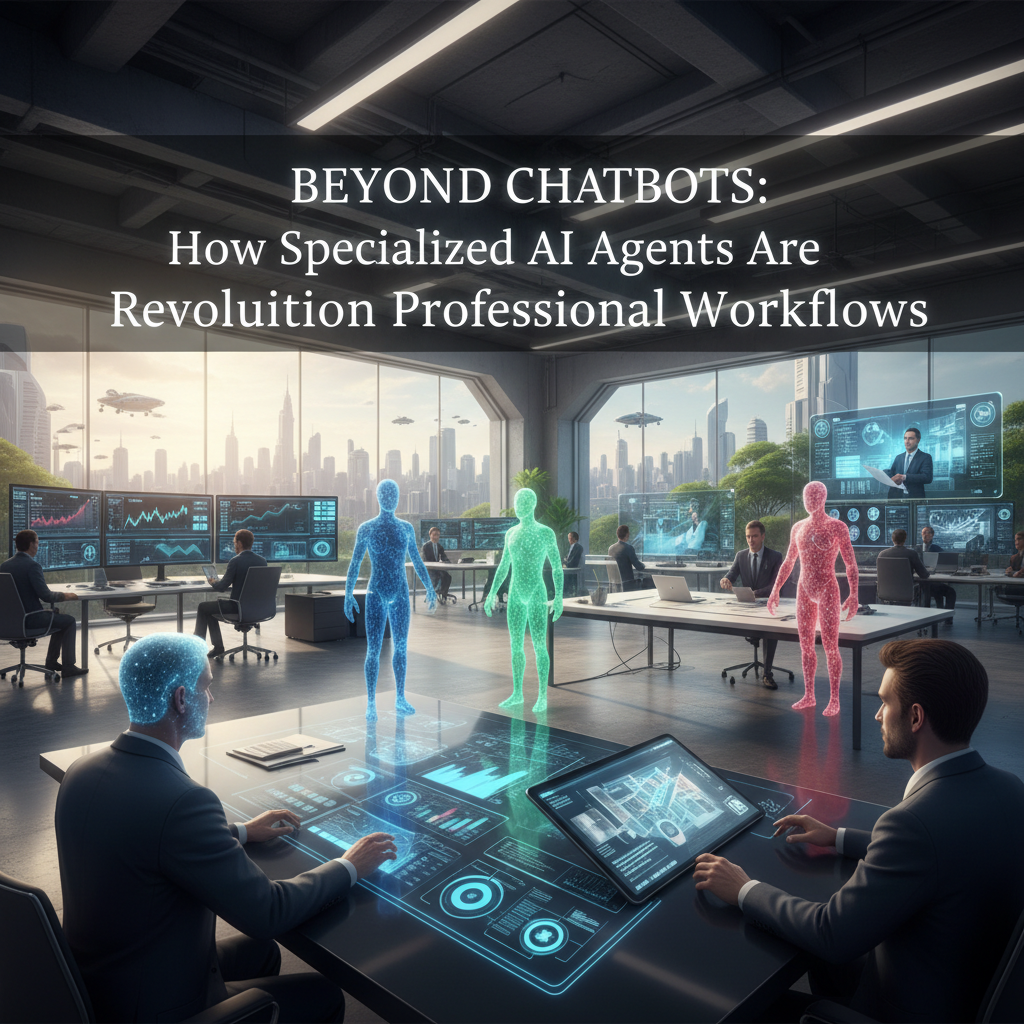
Forget simple question-and-answer chatbots. The next evolution in artificial intelligence is the specialized GPT agent. A GPT agent is an autonomous AI system designed to understand a goal, create a multi-step plan, and execute complex tasks to achieve that goal. They are transforming professional workflows by acting as expert assistants in specific domains.
Unlike a chatbot that only responds to prompts, an AI agent can proactively use tools, access data, and reason through problems. This article explores how these agents are revolutionizing industries through two key examples: no-code app development and advanced cybersecurity.
Key Characteristics of an AI Agent:
- Autonomy: Can operate independently to complete a defined objective.
- Goal-Oriented: Works towards a specific outcome rather than just answering questions.
- Tool Usage: Can leverage software, APIs, and databases to perform tasks.
- Planning & Reasoning: Breaks down large goals into smaller, executable steps.
No-Code App Development: Building with AI Agents
The field of software development has long been a bottleneck for businesses, requiring months of work to turn an idea into a product. A new class of AI agent is changing this dynamic entirely. Tools like Tasklet are pioneering this space by enabling users to create custom applications using simple Natural Language Processing.
With this technology, a user can describe an application in plain English, and the agent builds a complete tool with a functional user interface. For instance, a project manager could ask the agent to “create a simple front-end to track my team’s billable hours in our Notion database.” The agent would then generate a user-friendly app, streamlining a tedious data-entry process into a few clicks. This is a prime example of building custom AI workflows with local agents that connect to existing business tools.
The most groundbreaking feature is the ability to handle back-end connections without formal API integration. You can simply tell the agent where the data resides, and it intelligently figures out how to access and manipulate it. This removes a massive barrier for companies with legacy systems or disconnected data sources, truly democratizing app development.
Automating Cybersecurity with Specialist Agents
While some agents focus on building tools, others are being trained for defense. In the high-stakes world of cybersecurity, the process of translating raw threat intelligence into effective detection rules is critical but extremely time-consuming. This is where specialized agents are making a significant impact.
Microsoft’s CTI-REALM is an open-source AI benchmark created to measure how well AI agents can automate the job of a security engineering professional. It tests an agent’s practical ability to perform the entire threat detection workflow, from start to finish. The benchmark evaluates an agent on its capacity to:
- Comprehend complex cyber threat intelligence (CTI) reports.
- Explore vast datasets to identify indicators of compromise.
- Write, test, and refine sophisticated detection queries, such as KQL (Kusto Query Language).
- Produce validated detection rules that can be deployed immediately.
Early results from CTI-REALM show that while certain AI models excel at the iterative process of refining queries, significant challenges remain. This data provides security leaders with an objective framework to evaluate which AI tools can genuinely enhance their team’s productivity and where expert human oversight is still essential. It marks a major step toward data-driven automation in security operations.
The Future of Work is Agent-Driven
From instant app creation to automated threat hunting, specialized AI agents are delivering tangible value across industries. Tasklet and CTI-REALM are powerful indicators of a new work paradigm where human expertise is augmented, not replaced. The future of work will increasingly involve professionals acting as directors, defining strategic goals for their AI counterparts to execute.
As these systems mature, they will handle the complex, repetitive, and data-intensive tasks, freeing up human professionals to concentrate on creativity, strategy, and innovation. The most valuable skill is quickly becoming the ability to effectively communicate goals and delegate tasks to these powerful new digital colleagues.
Frequently Asked Questions (FAQ)
What is a GPT agent?
A GPT agent is a sophisticated AI system that can autonomously understand a goal, create a plan, and use digital tools to execute complex, multi-step tasks. Unlike a chatbot, it is designed for action and problem-solving, not just conversation.
How do AI agents automate workflows?
AI agents automate workflows by breaking a high-level goal into a sequence of executable steps. They can then use tools like APIs, web browsers, and databases to perform each step, adapting their plan based on the results until the final objective is achieved.
Can AI agents be used without coding?
Yes. The rise of no-code platforms allows non-technical users to leverage AI agents. By providing instructions in natural language, users can direct agents to build applications, automate data entry, or manage tasks without writing a single line of code.
What is the difference between an AI agent and a chatbot?
The primary difference is autonomy and purpose. A chatbot is reactive and designed for conversation, answering questions based on its training data. An AI agent is proactive and goal-oriented, designed to perform tasks and interact with its environment to achieve a specific outcome.
How are AI agents used in cybersecurity?
In cybersecurity, AI agents automate tasks like threat detection. They can analyze intelligence reports, search for malicious activity in system logs, write detection queries (like KQL), and generate security rules, significantly speeding up response times.