How Virtual Reality Therapy Is Transforming Mental Health Care: From Fear to Freedom, One Simulation at a Time
Introduction
Imagine facing your deepest fear—stepping outside your front door—without leaving your living room. Thanks to breakthroughs in virtual reality (VR) therapy, this is no longer science fiction. For millions struggling with anxiety, phobias, PTSD, and even severe mental health conditions like psychosis-linked agoraphobia, VR isn’t just an immersive experience—it’s a lifeline. With rising demand and chronic shortages in mental health professionals, digital solutions are no longer a luxury. They’re becoming essential. From urban clinics to remote research stations and even space-bound missions, VR therapy is redefining what healing looks like in the 21st century. This article explores how virtual environments are not just supplementing traditional care, but revolutionizing it—delivering measurable, scalable, and deeply personal outcomes.
Conquering Anxiety with Immersive Exposure Therapy
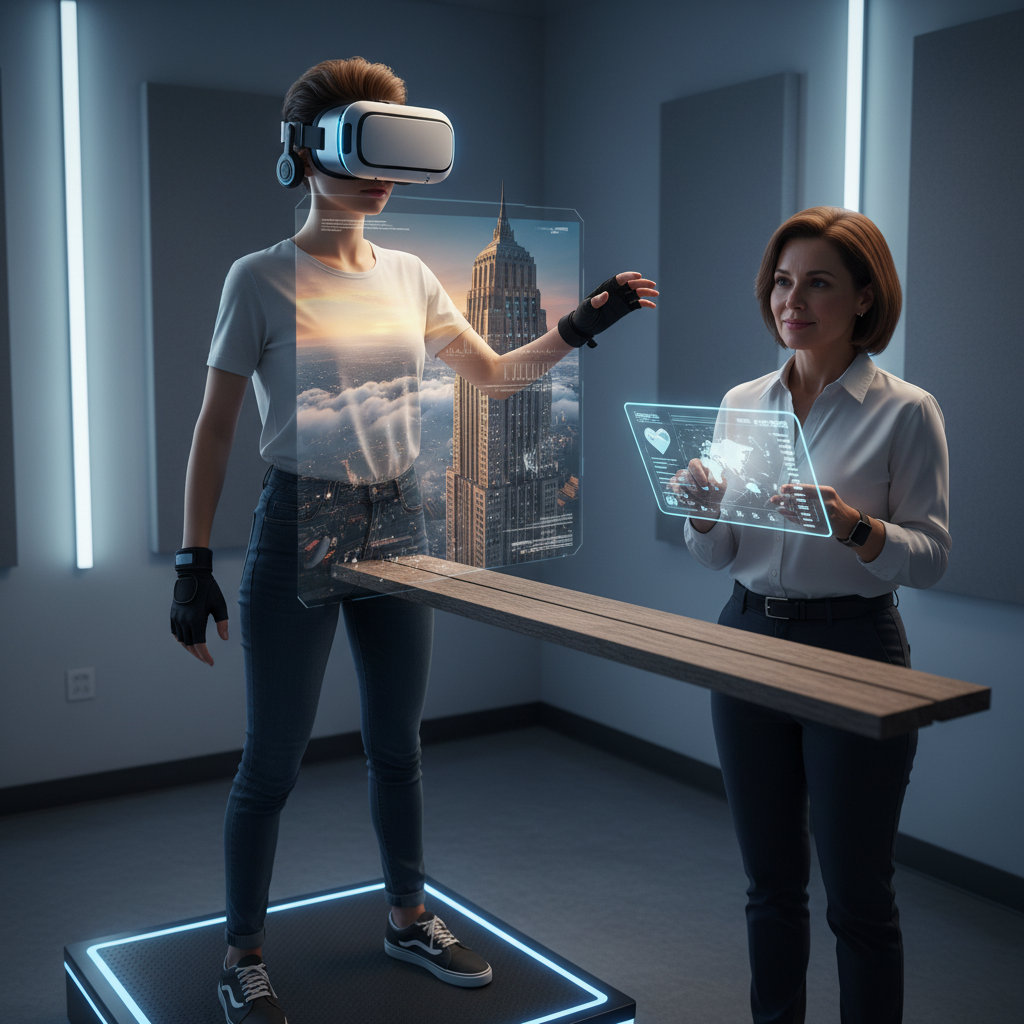
For individuals trapped by debilitating fears—such as the terror of public spaces or social interactions—traditional exposure therapy can feel overwhelming, even impossible. Virtual reality offers a safe, controlled bridge. Using realistic simulations, patients can gradually confront their triggers in a risk-free digital environment. Whether navigating a crowded bus, giving a presentation in front of a virtual audience, or cleaning graffiti from a wall, these practice scenarios build confidence step by step. One UK NHS-approved platform, GameChange, uses AI-guided avatars to lead patients through structured, clinically validated exercises. Results have been transformative: real-world studies show that participants previously housebound could safely venture out independently after just a few weeks of consistent VR sessions.
The Rise of Digital Therapists: AI-Powered Guidance Beyond Limits
Far from replacing human therapists, VR is enhancing their impact. By integrating artificial intelligence with hyper-realistic environments, these systems act as digital coaches—available 24/7, always consistent, and effortlessly scalable. A single trained virtual guide can support hundreds or even thousands of patients across different time zones, without burnout or bias. This is especially vital in regions with severe therapist shortages: in the U.S., for instance, over 122 million adults lack access to mental health care due to staffing gaps. VR therapy closes this gap by delivering high-quality cognitive behavioral interventions in schools, low-income communities, military bases, and even isolated scientific outposts in Antarctica or space habitats.
What’s more, early research indicates that VR can accelerate recovery. In youth populations, symptoms of anxiety and PTSD can be reduced up to five times faster compared to traditional CBT. This isn’t just about speed—it’s about rewiring neural pathways in a way that translates into real-world confidence and resilience, not just clinical scores.
Culturally Intelligent Therapy: Why Representation Matters in Healing
Not every healing experience is one-size-fits-all. The most effective VR therapies go beyond visuals—they adapt to culture, language, and lived experience. Research led by Dr. Mutlu, a child and adolescent psychiatrist from Turkey, revealed that culturally matched avatars significantly increased engagement, especially among young patients. One child described therapy as “the funnest part,” while another said, “They listened even when I couldn’t speak right.” This emotional connection isn’t accidental—it’s intentional. When a virtual guide speaks with the same dialect, wears familiar clothing, or references shared social norms, trust forms faster. A teenager from an urban neighborhood isn’t alienated by a gruff, elderly avatar playing basketball in a fantasy gym—it would break immersion and undermine progress.
This emphasis on context-specific realism—what researchers call “meaningful simulation”—is key. The success of VR therapy isn’t measured in resolution or frame rate, but in relevance. Whether in a cancer support center in Nairobi or a classroom in Istanbul, therapy that feels personal and authentic leads to lasting change. As Luciana Valerie notes, clinical value isn’t in pixels—it’s in the resonance of human experience.
Conclusion
Virtual reality therapy is no longer a futuristic dream. It’s a proven, scalable, and deeply human solution to one of our time’s most pressing health crises: mental wellness in an age of scarcity. With success rates exceeding 70% in clinical trials, faster recovery times, and reduced avoidance behaviors in just six weeks, VR is proving its clinical worth. Most importantly, it offers hope—especially where traditional care fails. As technology evolves, so too does our understanding of healing: not as a one-on-one conversation in a quiet room, but as an immersive journey, guided by empathy built into code, and made accessible to all. The question isn’t whether VR therapy can work—it’s how soon we can ensure everyone, everywhere, gets the chance to try it.