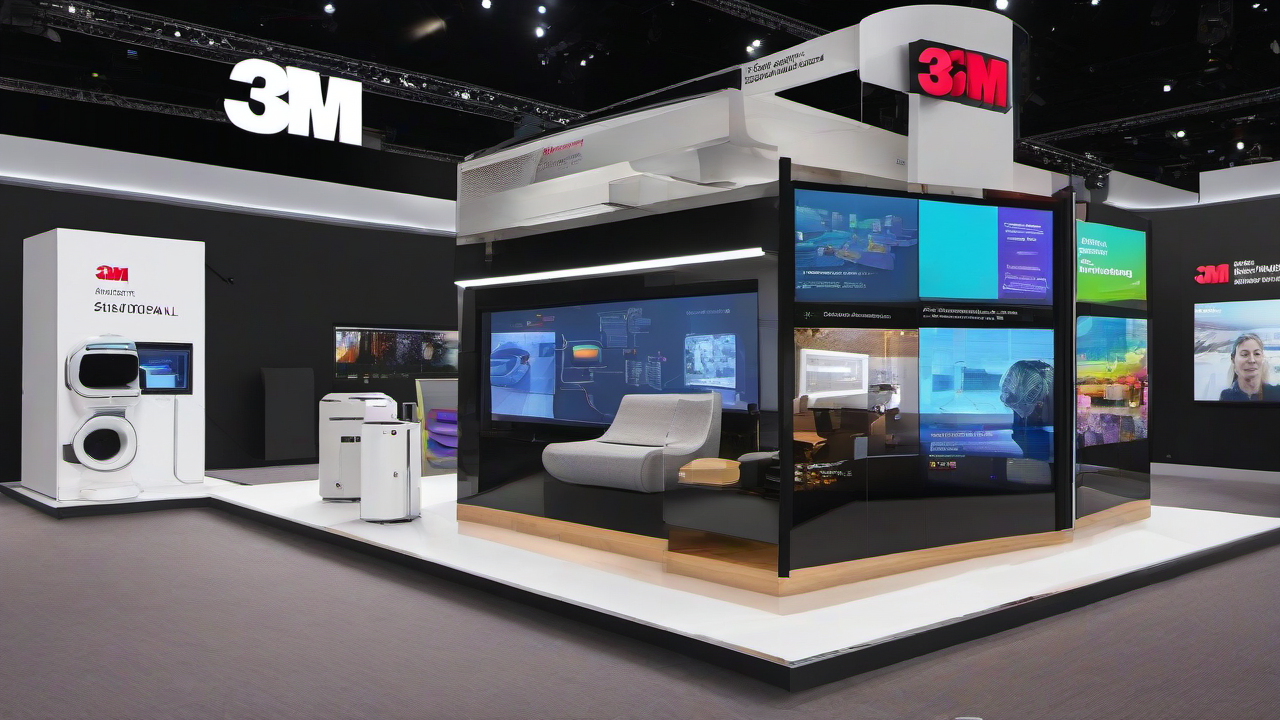
Revolutionizing Engineering with 3M’s AI-Powered Digital Materials Hub and Ask 3M Innovation
Introduction
Imagine a world where engineers across continents collaborate in real time to design next-generation products—without ever touching a physical prototype. In late 2025, 3M took a bold leap toward this future with the launch of *Ask 3M* and a fully reimagined Digital Materials Hub 2.0. This isn’t just an upgrade; it’s a paradigm shift in how materials science and product development intersect with artificial intelligence and collaborative simulation. From automotive safety systems to eco-conscious packaging, the fusion of generative AI, cloud-powered simulation, and global teamwork is enabling faster, smarter, and more sustainable innovation. In this article, we explore how these advancements are redefining engineering excellence—and why they matter more than ever in a rapidly evolving industrial landscape.
Ask 3M: Your Intelligent Co-Pilot for Material Selection
Traditional engineering workflows often involve sifting through dense datasheets, contacting suppliers, and running trial-and-error experiments. Enter *Ask 3M*—a next-generation conversational AI assistant built on Amazon Web Services’ Bedrock platform and AgentCore architecture. Designed to understand natural language queries, Ask 3M doesn’t just retrieve data; it interprets intent. Ask “What adhesive can withstand extreme temperature cycles in electric vehicle battery enclosures?” and the system instantly recommends top-performing 3M solutions—from high-temperature epoxies to flexible elastomers—tailored to performance, durability, and sustainability criteria.
What makes this transformative is speed and context. Unlike static databases, Ask 3M learns from project histories, material behavior patterns, and real-world usage feedback. It anticipates challenges before they arise, suggesting materials based not only on specs but on environmental conditions, manufacturing constraints, and lifecycle goals. For R&D teams, this means slashing design cycle times by up to 60% and reducing failed prototypes by leveraging decades of material science data in seconds.
Digital Materials Hub 2.0: Simulating Innovation in the Cloud
At the heart of 3M’s digital transformation is the reimagined Digital Materials Hub 2.0—now a dynamic, simulation-driven environment that turns theoretical design into testable reality. The new *Workbench* interface allows engineers, designers, and materials scientists from Boston to Bangalore to co-develop products in a shared virtual workspace. Whether it’s stress-testing a new composite frame for a lightweight drone or simulating thermal insulation in a sustainable building façade, all simulations run safely in the cloud, eliminating the need for physical sample production.
What sets this platform apart is its ability to simulate real-world performance under conditions that would otherwise require costly lab environments. For instance, a team designing a self-healing coating for offshore infrastructure can model corrosion resistance, UV degradation, and mechanical wear—all within a single digital twin. The platform doesn’t just simulate; it facilitates co-innovation. Subject-matter experts from 3M’s global R&D centers can provide real-time feedback, tweak variables, and iterate in minutes rather than weeks.
From Concept to Innovation: The Real-World Impact
The true power of Ask 3M and Digital Materials Hub 2.0 lies in their ability to accelerate sustainable innovation. Take, for example, a team developing a biodegradable packaging solution. Using Ask 3M, they query: “What polymers offer seal strength comparable to LDPE but degrade safely in compost?” The system recommends 3M’s bio-based films and sealants, then simulates performance under heat, moisture, and mechanical stress—all through the Hub’s Workbench. With feedback loops from global experts and instant material adjustments, the final design is ready for pilot production in record time.
This isn’t hypothetical. Companies in automotive, aerospace, consumer goods, and energy are already using these tools to cut costs, reduce waste, and bring eco-friendly products to market faster. The integration of real-time data, predictive modeling, and collaborative intelligence turns engineering from a linear process into a dynamic, adaptive ecosystem—one where failure is simulated before it ever happens.
Conclusion
3M’s Ask 3M and Digital Materials Hub 2.0 are more than tools—they’re catalysts for a new era of intelligent, sustainable product development. By combining the power of generative AI with real-time simulation and global collaboration, they empower engineers to innovate fearlessly, design faster, and create solutions that meet the demands of tomorrow. As industries embrace digital transformation, the ability to simulate, adapt, and co-create in virtual environments will no longer be a luxury—but a necessity. The question isn’t *if* your team will adopt this technology, but *how soon* you’ll start building the next breakthrough—without ever stepping into a lab.